
Returns · 5 of 6
How to compare your portfolio with an index (benchmark)
Your portfolio is up 8% this year. Is that good? It depends. If the market you invest in rose 20%, you fell well behind; if it dropped 5%, you did great. A return on its own says little: it only means something once you compare it with a benchmark index.
5 min read
In short
- A return on its own does not tell you whether you are doing well: it only makes sense when you compare it with a benchmark index that resembles your portfolio.
- The index should share your portfolio's type of assets, level of risk and geography; for a global equity portfolio, that means a world index such as the MSCI World.
- For a fair comparison, measure your portfolio with the time-weighted return (TWR) and use the version of the index that reinvests dividends (total return).
- If you beat the index, the difference in your favour is your alpha; if you fall short, an index fund might suit you better.
Why compare against an index
A benchmark index represents the average behaviour of a market: the S&P 500 for large US companies, the IBEX 35 for the Spanish market, a global bond index for fixed income. It is the yardstick every investment is measured against.
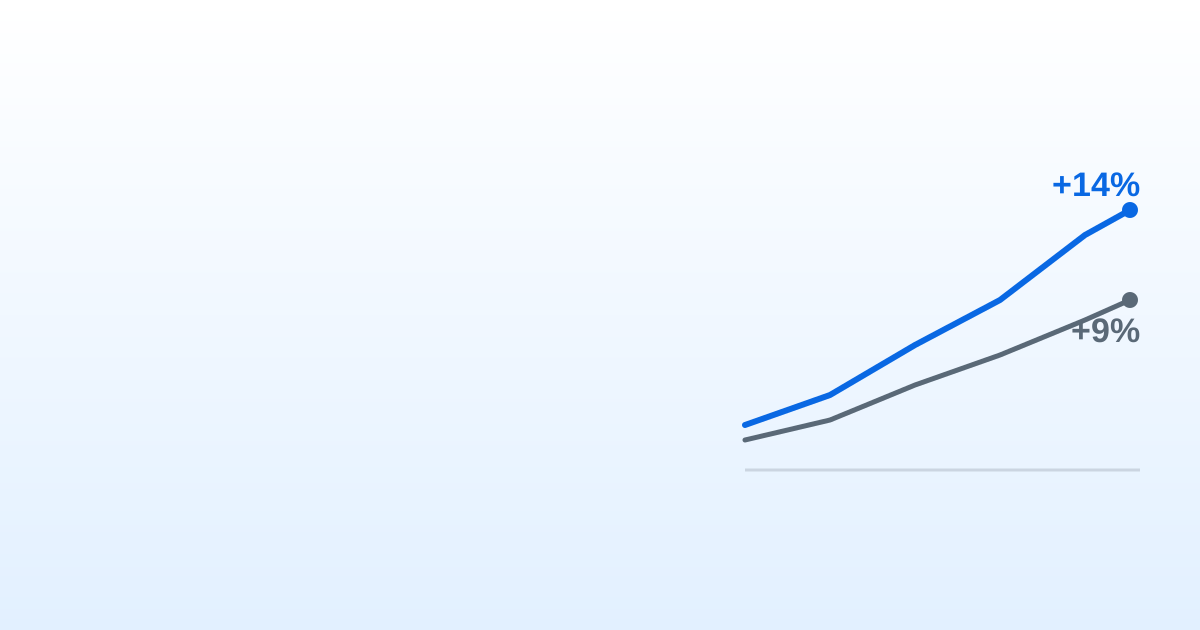
Comparing your portfolio with the index tells you whether your effort (picking stocks, switching funds, adjusting weights) actually adds anything. If you beat the index, that difference in your favour is your alpha: the value your decisions add. If you fall short, you might be better off simply buying the index through an index fund and saving yourself the work.
Without that reference, it is easy to mistake a good market for a good strategy. A +8% in a year when everything rose proves nothing; beating the index in that same year does.
How to pick the right index
The comparison is only useful if the index resembles what you hold. Pitting a bond-heavy portfolio against the S&P 500 makes no sense: different universes, risk and geographies. You would be comparing apples with oranges.
Pick an index that shares the same asset universe (stocks, bonds, mixed), a similar risk level, and the same geography or sector that dominates your portfolio. If you invest in European equities, compare yourself with a European index; if your portfolio is global and diversified, a world index (such as the MSCI World) is a better mirror than a single-country one.
The more the index resembles your portfolio, the cleaner the reading: the difference that remains reflects your decisions, not the fact that you are comparing things that do not match.
How to make a fair comparison
Use the time-weighted return (TWR)
If you have added or withdrawn money, the simple return is distorted by the timing of your contributions and is not comparable with an index. The TWR isolates that effect and measures only how your investments performed, which is exactly what an index reflects.
Compare against the same risk universe
Make sure the index covers the same type of assets, risk and geography as your portfolio. Comparing a fixed-income portfolio with an equity index exaggerates or hides your real result.
Use a total-return index
Choose the version of the index that reinvests dividends (total return), not the price-only one. Your portfolio receives and reinvests dividends; comparing it with an index that ignores them hands you a false head start.
The takeaway
A lone percentage does not tell you whether you are doing well; the right index does. Pick one that resembles your portfolio, measure yourself with the TWR and use its total-return version, and you will know whether your decisions add up or whether indexing suits you better.
In MyPortfolio you can compare your portfolio against a benchmark index directly, with the fair calculation already handled, so you can see at a glance how much alpha you are truly generating.
Frequently asked questions
What is a benchmark for a fund or a portfolio?
It is the reference index its return is compared with, for example the S&P 500 for large US companies or the IBEX 35 for the Spanish market. It represents the average behaviour of the market the fund or portfolio invests in.
Which index should I compare my portfolio with?
One that resembles what you hold: the same type of assets, a similar level of risk and the same geography or sector. For a global equity portfolio, a world index such as the MSCI World is a better mirror than a single-country one.
What is a total return index?
It is the version of the index that reinvests dividends, as opposed to the price-only version, which ignores them. Since your portfolio receives dividends, comparing it with a price-only index gives it a false head start.
What does it mean to beat the index?
Getting a higher return than the benchmark index over the same period, measured on a comparable basis with the TWR. That difference in your favour is your alpha, the value your decisions add.